David, Rizpah, and the Sons of Saul

2 Samuel 21 is an example of the beauty and complexity of the Old Testament – and a reminder of why Christians should still read it.

Rizpah keeps watch in the tranquil night over the decaying bodies of her sons - painting by Joseph Turner

Rizpah keeps watch in the tranquil night over the decaying bodies of her sons – painting by Joseph Turner

I’ve been simultaneously reading the Psalms, Luke, and 2 Samuel. And, recently, I found myself flipping back to 2 Samuel feeling a little defeated. I was unsure of what I was really getting from reading through Old Testament histories, other than just knowing what’s in the book that I claim to follow.

It’s not that I don’t enjoy 2 Samuel – on the contrary, the book is lit. 1 Samuel is probably more well-known, what with David vs Goliath, David vs Saul, and David’s ascension to the throne of Israel, but 2 Samuel goes full of Game of Thrones as we follow more of David’s military exploits, his destructive affair with Bathsheba, his son Absalom’s rebellion, and more. General Joab’s repeated appearances in the book are enough on their own to make it compelling, and he’s far from being the only memorable character.[1]

So it’s not that I don’t find the accounts interesting or affecting, because things like the loyalty of David’s men, Hushai’s subterfuge, and David mourning over the death of Absalom are all moving or memorable for one reason or another.

But, to get back to what I was saying – just recently, as I was flipping back to 2 Samuel with the feeling that I was doing little more than reading stories, I came to 2 Samuel 21, which has given me more pause than any other scripture recently, and reminded me of why I should read the Old Testament. You may want to read the first 14 verses.

Basically, there’s a famine in Israel and David asks God what’s wrong. God answers that the famine is happening because of the way Saul, years before, wrongly attacked the Gibeonites. So David goes to the Gibeonites and asks what they want to settle the old score, and they make the bold demand of executing seven descendants of Saul. David complies, and the seven are hanged (which could mean by a rope, or it could mean impaling or crucifixion (yuck)). The bodies are not buried immediately, as would normally be custom, and are left to rot (perhaps until the rains came and the famine ended). Rizpah, one of Saul’s concubines and mother of two of the executed men, sits in sackcloth by the bodies of the seven and day and night fends off birds and beasts who would come seeking carrion. David is moved by this action, and he goes and gets the bones of Saul and Jonathan, and, together with the bodies of the seven, he has them all buried properly, together.

Then, and only then, does the author tell us that “God responded to the plea for the land.”

There’s any number of ways you can focus in on this text, and what I assume many readers will do first is consider the vengeance and punishment. This seems like a harsh decision from David, who turns over seven (probably) innocent men to atone for the sins of their father, something that seems in conflict with the book of Deuteronomy as well as some of David’s past actions. Taking this a step further, we might attribute this blood-debt-human-sacrifice thing to God, which seems to be another example of the OT God being kinda vengeful and terrifying. However you focus this particular lens, this aspect of the text becomes a commentary on sin, atonement, and God’s righteous wrath, which is pretty run-of-the-mill when it comes to the violent passages of the OT.

But then why all the fuss about Rizpah and the proper burial? And why does the author wait until after the burial to say that God ended the famine?

There’s a tendency among readers, Christians and non-Christians alike, to either over-simplify or over-complicate the Old Testament. Given the situation, it can help us come to grips with the mass amounts of violence, the sins of our heroes, and all of the WTF stories. You might have to breeze past or carefully maneuver through things like Elisha’s she-bears and the medium at Endor in order to avoid coming away from the OT discouraged and confused. But simplifying or complicating our readings can distort or displace the messages that might be found in a more…oh, we’ll say, “theatrical” approach.

So, in this story, when does God appear?

  1. At the beginning, when God tells David why the famine is happening, but doesn’t tell him what exactly he needs to do.
  2. Throughout the story, as David and the Gibeonites mention carrying this atonement out “before the LORD.”
  3. At the end, when God ends the famine after David has properly buried the seven, Saul, and Jonathan.

The author makes the two explicit references to God saying or doing something at the beginning and the end, which makes me think that, after defining the problem Israel has in the beginning of the story, God does not see the problem as solved until the very end. This could mean that God didn’t need an execution to satisfy his wrath in the first place. Maybe there was something else that happened that really led to God ending the famine.

So let’s, in a sense, take God out of the middle part of this story and replay with what we have to work with, as well as free of complicated symbolism and allusions:

David goes to the Gibeonites and asks them what they want. We know from the famous Gibeonite Deception that the Gibeonites were not your average -ites, and here they have a not-so-average demand. They demand a steep price – that sons should die for their father’s crime. David, apparently without directly consulting God, agrees.

Imagine now what this looks like for David, the Gibeonites, and the seven. David loved Saul and Jonathan, and has made certain to show mercy to Saul’s grandson Mephiboseth. Now, in order to end a famine, he feels he must hand over seven innocent sons of Saul. The Gibeonites aren’t seeing this as God’s prescription – they’re sensing an opportunity to satisfy a desire for overdue vengeance. And the seven? They are, quite unexpectedly, informed that they are to be executed for something they didn’t do. And so the three parties meet up at a mountain, and the seven relatives die next to each other.

That’s a pretty gut-wrenching scene, yes? You can almost see David and some of the Gibeonites turning away as brothers and half-brothers die a gruesome death together.

God isn’t so squeamish as we are, but still God does not appear – the famine has, apparently, not ended.

The Gibeonites don’t give the seven a proper burial. Perhaps they are waiting for the famine to subside before they do so, or maybe they’re just adding an insult to the house of Saul on top of their vengeance. As David and the Gibeonites go home, probably satisfied that their business has concluded and the famine will end, the stage is cleared for Rizpah, whose actions led me to think so much about this story.

Rizpah bore two sons to Saul as his concubine, and they have just been executed. It’s possible she was there when it happened. When everyone else leaves and the bodies of her sons and five others lay rotting, she stays. She stays and mourns, fending off not only the birds that come by during the day, but the “beasts of the field” at night. Beasts of the field? This woman is not only mourning the loss of her two sons, but she’s fending off beasts of the field? At night?

This doesn’t have to be in the Bible to be moving. That’s a beautiful expression of a mother’s devotion and a horrific consequence of humanity’s violence, with or without fitting into the framework of scripture. And this is what you might miss in the Old Testament if you breeze through it or pedal too hard – the pain and beauty that resonates with readers as humans. The Bible is, at its most basic, a story, and stories should be felt in the same way that we might feel a novel or a poem or a film. Don’t miss this.

I’m not the only one who was affected by Rizpah’s devotion – it moved King David to action as well. David went home after making his deal with the Gibeonites, but he heard about what Rizpah was doing. His response was to go get the bones of Saul and Jonathan, which had been buried in haste to stop the Philistines from desecrating them. Once he has these, he has the remains of Saul, Jonathan, and the seven sons of Saul taken to a proper burial ground and put to rest. It’s an act of kindness to Rizpah, a posthumous nod to his dear friend Jonathan and his master Saul, and probably a weight off of his mind.

And then God ends the famine.

Maybe God did require that Israelites die to atone for Saul’s sin and bring about the end of the famine. And maybe this story, like many others, calls us to account for this in our view of God and corresponding doctrines of sin and atonement. But, in this case, that would actually be imputing our narrative onto the scripture, because this passage doesn’t say that God called for this action. What it does say is that God acted (implying that Saul’s debt was paid) after David buried the bones.

So what does this tell us about God? It could suggest any number of things – God holds life sacred, God is more concerned with loving hearts than with robotic obedience, God is merciful even in vengeance.

But I think looking at the story this way tell us much more about us – and isn’t understanding God, the Bible, and theology fundamentally connected to understanding ourselves and how we fit into these beliefs? We can gain these insights by examining what humans do between God’s actions in the story.

Doesn’t this story teach us that we can be cruel, vindictive, and unjust? Doesn’t it show how savage our own ideas of vengeance can be? Isn’t there something here about the sacredness of motherhood? Shouldn’t it teach us about the beauty of human life and the evil of desecration? Can’t it move us to reflect on loyalty, family, brotherhood, and honor?

Perhaps, above all, this is a reminder to heed Micah’s words to “Do justice, love mercy, and walk humbly with God.” God doesn’t appear pleased when the vengeance has been satiated – rather, in this story, God appears pleased when Rizpah and David are just, merciful, and humble.

By taking a step back and taking this story as a story, by actively watching it rather than passively reading it, we can avoid the usual pitfalls of OT reading. And you won’t always find that approach in commentaries.

Reading the Old Testament is hard work. Thankfully, the meticulous study of theologians and scholars is good and helpful while illuminating many mysteries and raising further important questions. But sometimes, when we read, we make the difficulty of the OT into a burden that we’d rather avoid, either because it is challenging reading, boring, or disturbing. Sometimes it messes with our idea of God, and other times it is unclear how it should teach us anything about God or being a Christian.

The solution to these common problems might not necessarily be as complicated as you think.

Read it. Wrestle with it. Let it play out in front of you and move you.

Its complexities will unfold into great and terrible beauties and truths – sometimes in the most unexpected places.

Forth now, and fear no darkness.

Soli Deo Gloria

– Peter

Notes

1 Seriously, Joab is a colorful, crazy, brutal, bad-ass general. My favorite Joab scene is when David is mourning the loss of his son Absalom (whom Joab killed, btw), and Joab gives him a good-ol-fashioned “What’s the matter with you?” (like Robert De Niro in Goodfellasbecause David’s mourning makes it look like he doesn’t care about his soldiers who were killed in the war with Absalom.

Wayne Grudem, Thomas Aquinas, and Cultural Blindness

St-Thomas-Banner-640x256

The evangelical world was caught off balance yesterday by a Wayne Grudem’s endorsement of Donald Trump. Actually, what the theologian posted on Townhall  goes beyond a simple endorsement, as he makes the argument that, not only is it morally correct to vote for Trump, but that it would be sinful for a Christian to vote for anyone other than Trump (even a conservative third-party candidate).

Wayne Grudem is a giant of theological intellect, and a much-respected and much-beloved member of the evangelical community. His magnum opus, Systematic Theology, is one of the definitive works of Western Christianity in the 20th Century. He has been name-dropped in lyrics by Christian rappers like Braille and Lecrae. I, like many Christians, am grateful to Dr. Grudem for his work.

But this article is really, really, dumb. A brilliant man used go-go-gadget arms to reach for Biblical interpretations and applications while making breathtaking leaps of ignorance and inconsistency. While some Christians have accepted his words as the sound work of a solid logician, many in the evangelical community are shocked and disappointed. I won’t bother to walk through everything that is wrong with what he writes – if you can’t recognize it on your own then I don’t think I’ll be able to help you see it, at least not in one go.

However, Grudem is not the first brilliant theologian with an authoritative tome to his name to have written something really, really dumb.

Just yesterday I was reading Elizabeth Johnson’s She Who Is, and she refers to a quote from the 13th Century theologian Thomas Aquinas, in which he claims that it is a failure of man when his seed leads to the creation of a female:

“Only as regards nature in the individual is the female something defective and misbegotten. For the active power in the seed of the male tends to produce something like itself, perfect in masculinity; but the procreation of a female is the result either of the debility of the active power, of some unsuitability of the material, or some change effected by external influences, like the south wind, for example, which is damp, as we are told by Aristotle.”

Another genius, with the epic albeit incomplete Summa Theologica to his name, basically said that a man’s sexual performance determines whether or not he creates another man or disappoints nature with another female.

Clearly, that is really, really dumb.

But Thomas Aquinas, despite being nicknamed the “Dumb Ox” by his classmates, was not dumb at all. And Wayne Grudem, as he has time and again demonstrated, is not a dumb man either. It would also be irresponsible to claim that either of them are bad men – indeed, those who know Dr. Grudem would say that he has only the best intentions.

And therein lies the danger of making this about Dr. Grudem. This is the urgent matter at hand: while not excusing his ignorance, Dr. Grudem is a product of the Christian culture from which he comes, one that has chased after the wind and missed the billionaire Leviathan coming straight for them.

We do not throw out Thomas Aquinas because of this one quote largely because this sort of view is not particularly unique among thinkers of the 13th Century. Rather than indicate something about Aquinas, what this really reveals is something about that culture. Sexism was so bad at that time that a genius could think dumb things like the above quote – and it is for this reason that Johnson uses this quote to highlight the need for feminist theology. Again, it doesn’t excuse Aquinas for his view, but it is much more a condemnation of the culture than it is of that one man. Christianity and slavery have a similar relationship. For example, Jonathan Edwards owned slaves. That’s not about Edwards as much as it is about the evil slave-owning culture he lived in (and again, it doesn’t excuse Edwards).

Wayne Grudem’s argument reveals a strain of Christianity that is saturated with conservative principles, not the Gospel. Grudem dismisses all facets of liberalism, and asserts a desire for Christian cultural dominance and comfort. This is not written like a theologian who has decided it is time to get involved in politics – it sounds more like something Sean Hannity would write after Googling a few passages of scripture.

Now, if someone believes that Hillary Clinton must be defeated at all costs solely on the grounds of overturning Roe v. Wade, and if they think that overturning that decision will somehow end all abortions, and if the thought of the unborn being killed far outweighs any other moral issue, then I can’t really tell that person that they are wrong to feel that way. It’s an issue I wrestle with, as it is of great importance to me, too. So I get it – abortion is, for some people, the only issue that matters at all, and if that’s the case, I guess I understand why that person would vote for Trump.

But that isn’t what Dr. Grudem does. Rather, he writes a comprehensive list of reasons that make Trump a good candidate and Hillary a bad one, and each and every time it is on the basis of conservative far-right politics. Dr. Grudem is so committed to his ideology that he misses, ignores, or excuses all of Trump’s faults, editorializing a demagogue into a “good candidate with flaws.”

It’s not just that he’s saying that a vote for Hillary is a sinful choice – it’s that he saying that to vote for anyone besides Trump, to conscientiously object, and vote for, say, Gary Johnson or Ben Sasse or anyone else would be sinful.

The temptation is to make this about Grudem, and while it affects the way I see him, it should reveal much more to us about Christianity in America. What does it say about what American Christianity teaches and what it practices when one of the most influential minds since the Puritans can write something like this?

I believe it indicates that large portions of white evangelicalism in America are still plagued by racism, sexism, and ethnocentrism. They are still led astray by nationalism, militarism, and a need to be culturally dominant and secure. There is cowardice. There is ignorance. And there is an overwhelming anti-liberal sentiment. I’m sure many of you have felt that last one personally.

The Democratic National Convention made a tour-de-force case for their party and their candidate as the option for love, patriotism, and democracy, following up the bumbling and flailing efforts of the circus in Cleveland. I’m not saying that Hillary and the Democrats are really all about the things that were promoted at that convention, and it’s not like every Republican loves the idea of the authoritarian state which Trump envisions. But it’s remarkably tone deaf to denounce the comprehensive evils of liberalism after those two conventions.

But tone deaf is what much of American Christianity is, and we need to be aware of this and the way it affects our religion and our politics. This tone-deafness leads Eric Metaxas, the man who wrote a big book about Dietrich Bonhoeffer, to say that Hillary, not Trump, is like Hitler. C’mon man – you wrote the book!

It is important to be aware of our religious blindspots. Rather than trying to isolate particular cases as problematic, it’s important to see failures as the norm.

All this is to say, it’s not Dr. Grudem’s opinion that alarms me, so much as it is the culture that has shaped his brilliant mind.

Forth now, and fear no darkness.

Soli Deo Gloria

– Peter

ESPN Does Nudity the Right Way

The Body Issue is art. Why aren’t we treating it that way?

Odell Beckham Jr CREDIT: Carlos Serrao

Odell Beckham Jr CREDIT: Carlos Serrao

Tomorrow, ESPN the Magazine will release its annual “Body Issue.” If you’re not familiar, the issue features photos of elite level athletes in the nude. At first look, it might appear to just be an answer to the swimsuit issue released every year by Sports Illustrated. It’s a natural comparison to make, but the Body Issue is only like the swimsuit issue in the most superficial ways. Yes – they are both exhibitions of the human body found in sports magazines. But while one uses sexy decadence to create attention and sell issues, the other is a true meditation on the nature of the body. Let’s put it this way – if the two annual issues were made into science fiction movies, one would be directed by Michael Bay and the other by Ridley Scott.

Perhaps the first edition of the Body Issue in 2009 was a response to SI‘s iconic swimwear showcase, but its true inspiration is rooted in some of the great works of art ever produced. While bodies have been the subject of many mediums, in no other form does it quite come to life as in sculpture, and most of the great sculptures are studies of the idealized human body.[1] For thousands of years we have been fascinated by presentations of human physicality.

And while the Body Issue springs from this ancient facet of our consciousness, it also exists at a time in which reevaluating physical ideals is a constantly trending topic. Discussions of body shaming, standards of beauty, health, and objectification are consistently lighting up social media and appearing *ahem* on blogs. At times it seems like no one really knows what to make of everything – it’s a complex conversation with its own lexicon.

So, knowing that humans have a history of considering physical excellence and considering the fluid and nuanced modern perceptions of the body, it might seem safe to assume that the contributions of SI and ESPN are just two more planes in Dechamp’s Nude Descending a Staircase. But I do not believe this is the case. Rather, the Body Issue makes a definitive statement on the matter through a beautiful expression that is both a work of art and a triumph of human physicality.

This year’s edition will, like past issues, feature an eclectic group of elite athletes, including behemoth Vince Wilfork, tall and graceful Elena Delle Donne, petite and powerful Christen Press, and transgender athlete Chris Mosier, all of whom will be featured alongside more conventional Greek Gods like Greg Louganis and Nzingha Prescod. And they are all beautiful. They are all ideal. They were given different body types, but through their natural talents and hard work they perfected their bodies into their version of the ideal athlete. Color, shape, and size doesn’t matter in the Body Issue.[2]

By featuring the bodies of elite level athletes, ESPN promotes goals but denies standards. It displays the ideal, but subverts understanding of what is better or more beautiful. Just because there is something else we should strive for does not mean we need be ashamed of what we have. If the photos were just of attractive people with impressive physiques, it would lose some of its potency, because these bodies are shaped into serving a specific purpose. These impressive figures are used to compete in the great arena of sports, and knowing that there is a specific intent that goes into making these bodies makes them that much more inspiring and beautiful.

So our culture asks: What is the ideal body type? What is our standard of beauty? ESPN can answer by holding up any photo from their Body Issue archives.

Again, this does not mean that we are not beautiful just because we don’t look like Greek and Roman sculptures. What it means is that our beauty and our physical excellence is not defined by our skin tone, height, facial features, bra size, jock size, or bone size. It’s based in being our best self. Is that cliche? Maybe, but it’s the message of the Body Issue. It’s the message of I don’t know how many pop songs[3] and that remarkable AXE commercial from earlier this year.[4]

Sure, athletes are endowed with some things the rest of us don’t have, but they are not all equally endowed, and 99% of them only made it to the big time by improving on their natural gifts. They are the most excellent version of themselves – and that is a goal for any of us.

It’s the missing component of sport that makes me say that Sputting plus-size model Ashley Graham on the cover of their most recent swimsuit issue is a minimal effort at changing the body image discussion. They are still saying that beauty is based in a lascivious presentation of breasts and hips and a pretty face. And they are still making sex the purpose of her figure. They are not presenting her, or any of their models, as figures of speed, strength, and agility – just figures of sex.

But some might say the Body Issue is no better. They may claim that it is really just lewd objectification. What? Nude photos? What could be redeeming about that? My guess is that people who say this have not actually looked through the Body Issue galleries. Yes – some photos are a little more risque than others, but the vast majority have a clear artistic intent, and that is to demonstrate the excellence of thw athlete’s body. Something that makes these photos remarkable is that so many of them are of the athlete in a natural athletic position. In the photos, they are doing something that we would see them do in competition, and now, with clothes removed, we see their body in all its glory doing that athletic thing. Might that thing draw attention to their legs and buttocks? Yes – because the athlete needs their legs and buttocks to looks fabulous in order to do the things that they are doing. Christen Press, who will appear in this year’s issue, talked about how her body looks like soccer. The Body Issue captures the specific beauty of each sport as represented in the physiques of its athletes. It’s possible to see physical beauty without sexual edification, and that is what the Body Issue does. It’s beautifully designed, directed, photographed, and presented.

And maybe some will avoid the Body Issue on the simple basis of nudity. And maybe that’s best for some people, but, as a culture, this is the kind of nudity that we should embrace (uh, phrasing?) in the same way that we embrace the great works of nude sculpture. If nudity is a problem, it’s because we’ve made it a problem. We’ve lost the gift of admiring the strength, grace, and beauty of magnificent bodies because of our collective lechery. I hope that, through proper understanding of things like The Body Issue, we can recover a useful appreciation of the human body. And, to do that, we kinda have to look at the body when it’s naked.

The body and how it is valued and presented will continue to be a contentious subject. And, as confusing as some of it may be, these are good discussions to have. Meanwhile, the great sculptures will remain in museums to be admired by millions of visitors every year.

And, tomorrow, ESPN will once again step into these two facets of culture and expose us to the best kind of art – the kind that is beautiful and creative, and the kind that teaches us something about each other and about ourselves.

Forth now, and fear no darkness.

Soli Deo Gloria

– Peter

10 of the Best from the Body Issue

  1. Indianpolis Colts offensive line
  2. Aly Raisman
  3. Nigel Sylvester
  4. Angel McCoughtry
  5. Kenneth Faried
  6. Sydney Leroux
  7. Danell Leyva
  8. Ashton Eaton
  9. Destinee Hooker
  10. Jon “Bones” Jones

Notes

1 But not just in the splendor of David or Venus – in the pain of Laocoon, the sleeping faun, the weary boxer, the winged woman, the defeated warrior. There wasn’t just one way to portray an ideal body in sculpture.
2 There have also been physically “disabled” athletes. I will add that there has been a dearth of Asian athletes. It’s possible that’s a cultural thing about modesty and Asian athletes turn down the offer…because obviously there are Asian athletes with impressive bodies. Then again, it could be a sorta racist thing (white imagination has a way of distorting views of non-white bodies).
3 Isn’t Mary J. Blige great?
4 I’m serious when I say this commercial is a work of genius.

Game of Thrones and the Unexpected Virtue of Goodness

Sandor Clegane has returned, and he’s stumbled across the thing that holds HBO’s fantasy world together.

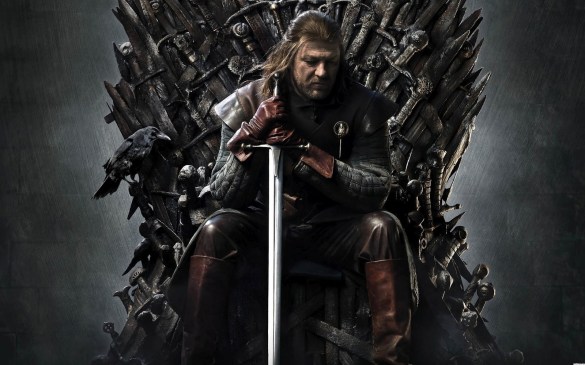
Ned_Stark

Even if you don’t watch Game of Thrones, you probably know some things about it. Namely, that it is very violent, full of sex and nudity, and prone to killing off main characters. And these things are true to some degree.

Fans have also come to know and love the complicated morality of the series. It is not so simple as good versus evil – each character has their own motivations that play into the decisions that must be made in complex situations. This would stand in contrast to many other popular works of fantasy, such as The Lord of the Rings.

This is much of the reputation and eventual legacy of Thrones – the show that went where no other show dared to go, showing the naked bodies and the bloody violence, killing the main characters, prospering the sadists, muddying the waters of morality, and changing the bounds of the fantasy genre forever. It won critical acclaim and a massive following all while offending sensibilities.

Simply put, it’s the brilliantly made show that is built on a lot of badness.

But nothing is really that simple in Game of Thrones. In a world where lives deemed lesser are so easily snuffed out, there is a special care given to cripples, bastards, and broken things.[1] A ruling class is manipulated by a couple of former commoners. While women are often used as items in sexual barter and treated as inferior, many women assert themselves as the most formidable adversaries in the world. Explicit sexual acts are often depicted, but the romantic relationships always prove to be based in something greater than the bedroom. Families are malleable, political entities, but family loyalty carries more weight than anything, and the entire show is largely based on the fate of a single family.

This show, which has become famous for sex, violence, and moral ambiguity, is bound together by an irreproachable sense of goodness.

Consider the fate of Oberyn Martell. His shocking, gruesome, over-the-top death at the hands (literally) of Gregor Clegane is one of the best examples of the series’ penchant for violence, surprise, and the triumph of evil over good. However, for me, the bloody trial-by-combat is overshadowed by what happens before, when Oberyn tells Tyrion that he will fight for him. Their discussion in Tyrion’s cell is an affirmation of the value of all human life, a rallying cry for justice, and an act of great courage. Quite unexpectedly, the morally ambiguous Oberyn provides us with one of the greatest moments of goodness that for me will always overrule what followed.[2]

I only entered George R. R. Martin’s world a couple months ago and began a binge-watch on the recommendation of a friend. I did so with a sense of trepidation, knowing the reputation the show had gained for its shocking violence. And, as I progressed through the seasons, I remember time and again feeling a sense of hopelessness, a feeling of doom. Is there no place safe in Westeros? Can evil be defeated? Who can be trusted? Who are the true heroes? So often I found myself despairing in a world ruled by the sword. All the good that was ever accomplished could so easily be undone. As the followers of the Lord of Light preach: The night is dark and full of terrors.

But it is precisely because the night is dark and full of terrors that the goodness becomes the glue that holds this show together. Not just in the obvious places, like Ned Stark’s honor, Daenerys’ mission to liberate Slaver’s Bay, and Jon Snow’s sacrifice, but in the smaller things as well: Catelynn’s love for her children, Jor’s leadership of the Watch, Davos’ kindness to Shireen (and vise versa), Podric’s loyalty, the Hound’s protection of Arya, and the list continues. In fact, the more the show goes on, the more it appears that it is not so much the case that there are so few true heroes as there are so few true villains – take for instance the way goodness has taken hold in Jaime and the Hound.

The events of the ongoing sixth season have continued to reveal this, but perhaps never so starkly as in the most recent episode, “The Broken Man.” We are introduced to Ray, a spiritual leader who admits to Sandor that he doesn’t know which gods are the real gods, or which ones exist at all, or if they’re all the same thing. “Oh there’s plenty of pious sons of bitches who think they know the word of god or gods. I don’t…What matters, I believe, is that there’s something greater than us.”[E] This scene, besides being a compelling addition to the intriguing aspect of religion in the show, indicates something about why Sandor has left the Hound persona behind as well as why goodness continues to persist in face of the successes of evil.

But then, immediately after this conversation, we are taken back to King’s Landing where another religious leader, the High Sparrow, is having a conversation with Queen Margaery. Margaery is reading the Book of the Seven, and the High Sparrow tells her that “There are some who know every verse of the sacred text, but don’t have a drop of the Mother’s mercy in their blood, and savages who can’t read at all who understand the Father’s wisdom.” Interesting insight from a man who demands fanatical devotion to the teachings of the new gods, and strikingly similar to Ray’s words.

It’s become obvious that something exists greater than humans in Game of Thrones, even if no ones knows for sure which religion is the right one. But, as fascinating as the religious component is, I think what these scenes reveal that is most remarkable is the way in which the moral compass of this fantasy world is oriented by goodness. Even if murder, theft, and rape are commonplace, even if the strong take from the weak, so many of the characters in this world are endowed with an innate sense of goodness. It’s a dark world, but it makes the persistent acts of goodness that much greater. Ray doesn’t think that Sandor’s transformation from a brutal warrior to a quiet woodsman is a freak occurrence – Ray sees this as the way the world is supposed to work. He sees what the High Sparrow recognizes in the illiterate savages. It’s a knowledge that badness is not the way to survive in this world.

The goodness of Game of Thrones is twofold, in that while the fantasy world is held together by goodness, so too is its fan following. As much as viewers might revel in the show’s edginess as well as its moral complexities, I believe we are all bound to the hope of goodness even if winter is coming. It’s driven much of the discussion and reaction to this season’s events, such as our desperate hope for Jon Snow’s resurrection and our universal depression over Hodor’s fate. This is not quite like other smash-hit series with their anti-heroes (The SopranosBreaking BadThe WireMad Men), in which we might hold out in the hope of goodness but also, more often than not, gleefully follow bad people into their precarious situations. Even if we might appreciate the Machiavellian ruling of Tywin, the vicious cunning of Cersei, the moral disinterest of Bronn, and the spooky dealings of Jaqen, we still abhor the likes of Joffrey and Ramsay and instead venerate the goodness of Jon and Daenerys.

Both within the realm of the story and in our viewership, a sense of direction is still provided mainly by one character – Ned Stark. Even though he was executed near the end of the first season, Ned’s impact on the series cannot be understated. At the most basic level, the story largely hinges on his remaining family members, as has been the case for most of the series, and even just recently his brother Benjen has been re-introduced (and you can bet his deceased sister is going to prove vital, too). His decisions in the first season and ultimately his death precipitated the events that followed. Of course, much the same could be said of Tywin, but it’s the legacy of Ned Stark that carry the day. The Starks are good people because they were raised by a good man. In his day, even his enemies knew him to be full of honor, and years later his honor is remembered, such as in this last episode when Sansa reminded Lord Glover of his house’s commitment to Ned. Everyone who knew him was changed for the better – whatever strength is left in Theon Grayjoy is due to his adopted father, Ned, not his biological father.

It is not insignificant that one of the series’ first scenes is Ned executing the supposed deserter. It is a moment for him to remind his sons of an important lesson in honorable ruling, and as the show continues three of those sons will face a situation in which they hold to Ned’s teaching.[3]

Even before all this, whatever Ned decided to do at the Tower of Joy (there is much speculation) might be the key to the entire series (if the theories of Jon’s parentage are true). By the looks of things, Ned’s decision to bring home Jon and claim that he is his bastard is an important and honorable decision, made all the more so because supposedly fathering a bastard is the one mark against Ned’s honor.

But Ned is not just a moral standard and teacher for the characters of Game of Thrones – he is our teacher, too. Ned is the “main” character in the first season, and as we are introduced to the wild and violent land of Westeros, Ned is the one who protects us from danger, shows us the way to goodness, and instructs us in the way things should be. We stand by his sons as Ned executes the deserter. We see the game of thrones through his eyes. And, as he sits in prison, doomed to die on account of his honorable actions, Ned teaches us the way to face death when he says to Varys, “You think my life is some precious thing to me?” Just as the Stark children are the product of Ned’s parenting, so too is our viewership forever impacted by the honorable Lord of Winterfell.[4]

The place of goodness in Game of Thrones, the goodness taught to us by Ned Stark, prompts a discussion on the nature of the fantasy genre, a discussion to which I cannot now give fair treatment, but must mention. It has been assumed that Thrones, both the show and the novels upon which they are based, are a fresh take on some of the tropes of fantasy. Thrones, like most modern fantasy, is vitally indebted to the work of Tolkien. Tolkien, like the other writers in his coterie, believed that goodness should triumph over evil in works of fantasy. Writing in a time when meaning and morality were under assault in art and literature, Tolkien believed that moral order should still rule the day – that there should be good and evil, and that good should ultimately prevail. While Thrones has, no doubt, modified this trait, I believe it has quite clearly failed to totally break the mold. If even this unprecedented story cannot escape the captivating struggle of good and evil in fantasy, what does that say about the genre? Is it even possible to write a good fantasy in which goodness does not underlie all the death and destruction? But let me say that in no way does this diminish the accomplishment of Thrones – rather, it makes the goodness that much greater.

Just as goodness has driven the show thus far, so too will it dictate the manner in which it will eventually end. Simply put, the show cannot reach its finale until the story is resolved, and resolved in a manner in which goodness ultimately prevails. Think about it – could this show really end with the Night King conquering the North, or with Littlefinger on the Iron Throne, or with Ramsay Bolton still alive, or with Cersei winning? No. It can’t. Daenerys has to win, Bran must succeed, Jon must live, Tyrion must rule – these are the resolutions to the show’s ongoing plotlines. And that all means that goodness will persist, even if evil seems so overwhelming. Just as it seems that, surely, there is a reason for Jon’s resurrection, Sandor’s redemption, Tyrion’s survival, just as there seems to be a clear destiny for Daenerys and Bran, there is a greater force that rules the hearts and minds of viewers and the pens of writers.

Perhaps, despite all of the evil, Game of Thrones will be television’s greatest triumph of goodness.

Forth now, and fear no darkness.

Soli Deo Gloria

-Peter

Footnotes (New!) Click on the note to return to the text.

1 As Tyrion phrases it.
2 It might be my most favorite scene in the entire show. People might be put off initially by Oberyn’s desire for sex and violence, and may be unsure of whether or not he is a good guy or bad guy. I think this scene decides that.
3 Theon, Robb, and Jon all eventually execute men whom they sentence to death because of Ned’s lesson.
4 Ironically, the story that bucked the rules and killed off its main protagonist has never been able to escape the shadow cast by that character. But it’s a good kind of shadow.
E I realized after publishing this that I left out another important statement from Ray pertaining to goodness. He says to his followers later: “All I can do with the time I’ve got left is bring a little goodness into the world. That’s all any of us can do, isn’t it?”