American Individualism Is Complicated

Our blurred vision, manifest in sports, religion, and, of course, politics.

See The Farewell. Image courtesy of A24 and a compelling write-up at Radii China

It’s risky to begin with globe-encompassing dichotomous generalizations, but, as this essay might prove, perhaps seeing “the globe” and “the self” as so separate is the problem.

So, at the risk of generalizing, “the West,” (you have no idea how wrong I feel typing those words), and perhaps America in particular, is an individualistic society, while “the East” (please wait while the shadow monster emerges from my silent scream) is collectivistic.

This difference is succinctly presented in Lulu Wang’s The Farewell, a film from earlier this year with some long-shot Oscar buzz. Billi, raised in America since she was six, returns to China with her family to be with her terminally-ill grandmother, and she is frustrated with the family’s adherence to the Chinese tradition of keeping such an illness a secret from a family member. Her uncle, making the generalization I’m trying to avoid, tells her: “You [as a Westerner] think one’s life belongs to oneself. But that’s the difference between the East and the West. In the East, a person’s life is part of a whole.” Billi’s trip to China casts light on many tensions in her life, and her conflicted feelings are often based in her individualistic tendencies.

Americans do, indeed, value individualism, and thus China’s cultural practices relating to family and community often do not resonate. The teachings of Taoism and other philosophies and religions remain relics of foreign mystique. A film like Zhang Yimou’s Hero would never be made – let alone succeed – in the States. And, amid trade wars and “economic anxiety” and inconsistent foreign policy stances, anything “Chinese” arrives on American shores with a literal or figurative tariff.

But Americans could learn something from the Chinese. Increasing commitment to individualism is not always a good thing, and can pave the way towards even greater problems.

Let’s pause for a moment: who are you picturing when I warn of extreme individualists? If you lean to the left, you are probably envisioning a stereotypical MAGA man or libertarian bro who calls himself a rugged individualist going on about gun rights, the excellence of capitalism and private enterprise, and the oppressive nature of the government. But if you lean to the right, you might be thinking about a genderqueer atheist college student with dreadlocks clamoring for safe spaces. Again, I’m generalizing, but people on both sides of the political divide have an idea of what excessive individualism looks like.

Remain paused: this thought exercise is not some gotta-hear-both-sides centrist BS aimed at showing how we’re all wrong in some sense and what we really need is civility. The dangers of individualism are many and varied, and I am calling for nuance, but I’m not about that Ben Sasse life. I’m writing this as someone who is, well, really liberal. The point of the above thought exercise is to reveal that, despite individualism being an American value, how it is understood and put into practice is anything but black and white. For the sake of brevity, let’s just move past identifying the ways in which we are all selective (and at times hypocritical) in what kind of individualism we value.

Our selective individualism is, at times, not so much because we want to deny somebody the agency to be their best self (though sometimes it is), but because Americans do maintain some collectivistic tendencies. We should be able to hold both of these things in our minds at once, but a failure to consider the complex nuances in balancing the individual and the community often creates a tension that is present in many areas of American life, and it is a tension that may not be easily resolved. Three important areas which provide a good starting point for continuing to explore this tension are sports, Christianity, and politics.

Player empowerment has been one of the most important developments in American sports in the last decade. Players, especially in the NBA, have more control over their careers and are more able (and encouraged) to express their personalities than ever. It’s brought many positive changes, as it favors labor over management, makes the players more fun and the league more dramatic, and allows for players to speak out on issues from mental health to institutional racism. Not everyone is pro-player though, and, as happens too often, disagreement leads to polarization. Andrew Luck’s retirement from the NFL is a complicated matter, but nuanced responses were drowned out by voices on either “side” of an issue that shouldn’t have sides, as some view him as a hero brave enough to do what he wants with his own life, and others think he’s a wimp who betrayed his teammates and fans. It’s a problem if we’re letting our opinions bifurcate like that.

Player movement from team to team in the NBA provides an excellent case study in tension within individualism. While I think player empowerment is generally a positive thing, the manner in which star players are forcing their way off certain teams and onto others is an unfortunate development. Not everyone agrees with me, and younger NBA fans are gravitating towards being fans of players rather than teams, following them from stop to stop. I want players to be happy at work – I want everyone to be happy at work. I want labor to have power over management – my test results came back Democratic Socialist. But you know what? I think Kevin Durant is a punk. I think Kyrie Irving is a clod. And I hope *sarcasm* they have fun together in Brooklyn.

Team sports are about collective endeavor and loyalty. Players should see themselves as part of a community that includes teammates, fans, and – yes – the name on the front of the jersey. At the end of a decade of player empowerment, American sports fans are having trouble sorting out our understanding and appreciation of players vs teams. There’s a way to love and support players while prioritizing the club – English soccer fans seem to do it (well, unless the player is Black and playing for Chelsea). Some individual freedom has to be sacrificed for sports to work, and players who commit to a team should be celebrated. Is it possible that prioritizing teams can foster dangerous tribalism and sometimes brings out the worst of us? Yes. But whether or not sports are good for society is another discussion. For now, I maintain sacrificing teams for the sake of individual players could erode the bedrock of sports, and that’s worth considering even as we encourage players to be themselves and live their best lives. Maybe you don’t care about sports, but you live in a community that does.

Christianity places great value on individuals. It’s about having a personal relationship with God, and Protestant Christianity believes in “the priesthood of all believers.” Anti-abortion Christians are, supposedly, motivated by the belief that every single human being is made in the image of God, and therefore worth protecting from the earliest stages. But individualism is also a serious threat to the health of the local church – the essential nexus where God’s power acts through Christians in the world. The associate pastor at my family’s home church preached recently from 1 Corinthians 12, and challenged the congregation to all use their spiritual gifts for the good of the church. He contrasted the way in which American Christians sometimes have to be nudged towards serving to his time in South Korea where he found people thought of the church community before themselves.

The early churches were communes, more or less, but many of today’s churches fail to even be communities. In order to be a healthy, Christ-centered community, the individual members must relegate some of the values which define both conservative and liberal thought. Being a Christian and being a part of a church does not mean erasing the individual, but it does require a recognition of the ways in which individual desires can get in the way of the collective good, and some individual sacrifices must be made. However, failure to account for the way the Christian experience varies from person to person is a constant source of pain and failure as well. Being one in Christ is not the same as being the same in Christ.

It’s not impossible to develop and practice a nuanced vision for individuals living in community within churches, but it’s going to be challenging as long as we are uncritical in our understanding of individualism, collectivism, and their relationship. If you’re not a Christian, you might not think what goes on in churches has anything to do with you, but the health of Christian communities has implications for the planning of next month’s potluck as well as next year’s election.

Tensions don’t always resolve themselves. My guess is that we will find a more tenable position in sports relating to player empowerment, but I can’t predict what that will look like or when it will happen. I hope that more and more churches will return to early church roots while opening their minds to the potential for diversity of identity and experience among their members, but I also think there will always be more ineffective churches than good ones. But if there is anywhere that our messy version of individualism is unlikely to resolve itself, and thus pave the way to further tension, it’s politics, which has unfortunately become a stand-in for our overall worldviews.

Liberal ideology favors the protection of diverse, traditionally marginalized individuals, but liberal ideology also favors using government to put actions into place that will, for better and worse, make individual people do things they don’t want to do (but, seriously, who are these people who luuuuuv their private health insurance?). Liberal ideology wants the individual to flourish in whatever way they see fit, but also envisions a reorganization of government and economics powered by collectives of reformers – and a team that powerful requires individual sacrifices. All these goals can be acheived, but it will require articulating – with nuance and complexity – the relationship between individual freedoms and the common good.

However, there’s a half a country (eh, less than half, if we’re counting the way we should be counting) working out its own complicated vision of individuals and collective, a vision that is looking through a different set of binoculars. Conservatives want individuals to be able to do whatever they want, but they also place great value in the notion of citizenship as defined by government, and are keen on excluding certain people from those rights. Many conservatives long to labor together to create a wholesome society, but believe that society can be achieved through banning certain drugs and certain marriages and maintaining a militarized police force in the hopes of achieving law and order. Conservatives think everyone will benefit from the individual freedoms granted through free market capitalism, even though millions of people have suffered as a result of greedy individuals. There’s a lot of good in the conservative vision, but it cannot be achieved unless some of the contradictions are worked out.

Disagreement is part of politics, and I’m not making another tired, ineffectual call for unity. I want to move past pearl-clutching laments about how divisive these times are, and I want us to consider if there is something fundamentally contradictory about all of our visions of what it means to be American. If we can’t make clear-eyed assessments and articulations about individuals and communities in politics, then it is likely we will fail to do so in the other areas of our lives, most of which are, in some way, informed by the way we think about politics. A disordered, lazy political spirit could infect the rest of our culture, and if we, as individuals, allow ourselves to think about individualism in simplistic terms, we do so to the detriment of the community.

Consider, finally, the famous image of the Chinese man standing in front of the tank at Tienanmen Square.

This iconic image is a celebration of an individual. There is one human being visible, endangering himself as he stands up to big metal killing machines. We now know this individual as “Tank Man,” and a nickname can only be that unspecific when the accomplishment is truly legendary (like, you know, Star Wars Kid).

But making this image about the individual is a very American way of seeing it, isn’t it? It’s a limited vision. Perhaps we know that this is related to some protests at Tienanmen Square, but how many of us know what those protests were about? How many of us know that there were up to a million people involved in those protests? What if we see this individual as part of a whole? What if what see here is not just an incredible individual, but an incredible collective?

Tank Man showed great courage – that’s the easy takeaway. What the image says about his community is something worth giving a little more thought.

Forth now, and fear no darkness.

Soli Deo Gloria

– Peter
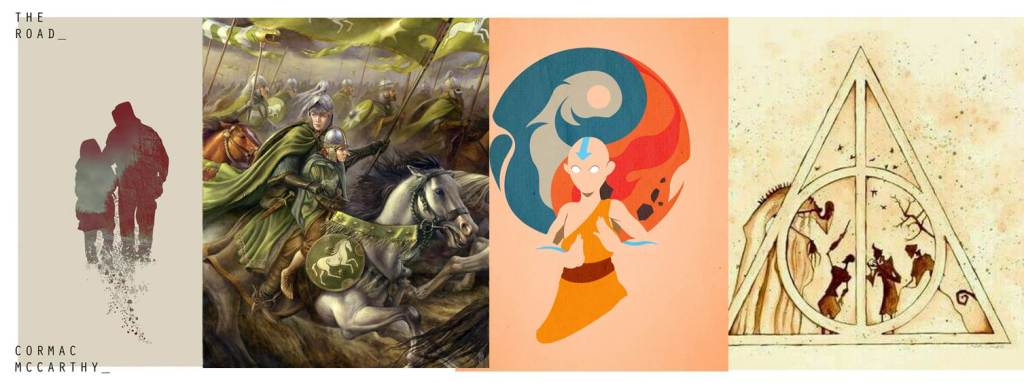
The Road to The Forest Again

Do not abandon hope, all ye who enter into this overly-long blog post.

Faith, hope, and love.

Simple enough words with slippery definitions. Faith gets saddled with a suggestion of blindness, “I hope” might as well mean “I wish,” and love ranges from “he who lays down his life for his friends” to “I love horchata”[1]. But the three theological virtues are special, and much more than loopy-scripted words adorning a kitchen thought board. They merit not only reexamined definitions, but earnest and regular practice, and one way to do this is to study their presence in art.

Not surprisingly, faith, hope, and love are often given simplistic treatment in books, television, and film, reinforcing simplistic definitions of each, but when treated with nuance, sincerity, and gravitas, they can be themes of great beauty and force. In On Reading Well: Finding the Good Life Through Great Books, Karen Swallow Prior examines thirteen virtues, and the works she uses for these three are Shūsaku Endō’s Silence (faith), Cormac McCarthy’s The Road (hope), and Leo Tolstoy’s Death of Ivan Ilych (love), which is quite the trio of emotionally-devastating works. Her explications of Silence and Ivan Ilych are resonant and thought-provoking, but my favorite chapter of the three (and of the entire book) is Hope. It’s encouraging to me personally, but it’s a theme that has been central to much of what I’ve been reading and thinking about over the last year, and KSP’s thoughtful, nuanced essay adds to my appreciation of hope’s role and, thus, of the stories overall.

By using the bleak, post-apocalyptic world of The Road as her observatory for the presence and nature of hope, KSP wrests the theme from the palm of rosy wishes and places it in the hold of pain and sorrow. “Hope isn’t the same as oblivion or naivete” (129), she writes, and she identifies a realistic reckoning of the world as the basis for the father’s hope in the novel (125). The man may not be able to see a way to a better, safer, life for him and for his son – and how could he? – but he also doesn’t let the grim possibilities stand as inevitable. In so doing, he demonstrates the four conditions for hope which KSP borrows from Thomas Aquinas: “[Hope] regards something good in the future that is difficult but possible to obtain” (123). The best kind of hope is not the kind that ignores the present difficulties of the moment or looks forward to some good thing which has already RSVP’d plus-one; the best kind of hope moves a person to put one foot in front of the other with the belief that something better might be found.

KSP also places the hope in The Road within an understanding of hope as a theological virtue – one that can only be completed through the work of a higher power. Theological hope, as opposed to a belief in the inherent goodness of human progress, understands the overarching condition of the world. It “takes evil into account” and is based on “belief in the goodness of creation, the nature of evil, and the plan of redemption” (136), and KSP sees that The Road hints at “something transcendent” and “points toward a hope that surpasses even the best human pursuits” (135).

One of the foremost places this kind of hope is modeled and explored is the Tolkien Legendarium. Interestingly enough, hope is represented in The Road by the motif of “carrying the fire,” and Tolkien uses the concept of “the secret fire” to represent the creative spirit of Illuvatar in the world. The theme is central through the Legendarium, and one way in which Tolkien explores it in The Lord of the Rings is by comparing hope to despair. Alan Sisto, co-host of “The Prancing Pony Podcast,” has written a compelling essay on the topic, noting that despair – what Sisto considers the opposite of hope – is based in an individual’s belief they know what is going to happen. Responding to Gandalf’s words that “despair is only for those who see the end beyond all doubt,” Sisto writes:

“Despair is only for those who see the end beyond. all. doubt. In other words, hope remains — or should remain — if the end is even the least bit uncertain. Is death 99.99% likely to occur? Then have hope! Since we are not omniscient, we must admit that there are none of us who can truly ‘see the end beyond all doubt.'”

King Theoden’s heroics are based in a restored hope, while Denethor, the Steward of Gondor, despairs amidst his belief that he can see the inevitable destruction of his city. “It’s certainly worth noting that pride and despair go together here,” writes Sisto. “Since hope necessarily relies on something (or someone) beyond yourself, it requires a certain amount of humility.” Not surprisingly, we see here Tolkien’s portrayal of hope channeling the attributes of hope as a theological virtue, as the humility of hopeful characters in the Legendarium “points toward a hope that surpasses even the best human pursuits” (KSP 135).

Sisto closes his essay with a connection to eucatastrophe (one of the most important aspects of Tolkien’s writing), and it recalls Aquinas’ conditions of good/future/difficult/possible, defining it as “a sudden and joyous turn, a miraculous grace that cannot be counted on, and can certainly never be counted on to recur.” The characters who forge ahead in spite of hardship and danger do so not because they know it will all work out in the end, but because they believe it may. Perhaps they will live to see the miraculous, and perhaps not, but what matters is that they go on[2] giving all their strength in the hope something stronger is at work.

Let us go, then, you and I, to two of the other works of art that are always on my mind: Avatar: The Last Airbender, and Harry Potter, and yes if you’re wondering this post is on the syllabus for Eloquent Mumbler 211: Survey of Peter’s Nerdiness. I know many readers won’t be familiar with one or both of these texts, but I hope you’ll stick with me. I’ll try to limit the excessive nerdery to the footnotes and I’ll try to explain what’s necessary in order to appreciate what I’m talking about.

The pacing within and across the three seasons of Avatar: The Last Airbender is brilliant, tracking along with Aang as he learns how to bend water, then earth, and finally fire in order to defeat the Fire Lord and save the world. There is, however, a run of episodes in the middle of Season 2 (and thus the middle of the series) that acts as a transition between the extremely dope run of episodes beginning the season[3] and the episodes in Ba Sing Se which might be the best arc in the series[4]. In these episodes, Team Avatar travels to an ancient library (“The Library”) where they discover vital information about a coming solar eclipse, but Aang’s flying bison, Appa, is stolen away from them and they are stranded in the desert (“The Desert”). They make the difficult journey to Ba Sing Se (“The Serpent’s Pass”), only to find the city facing an attack which they must repel (“The Drill”). The parallel storyline of Zuko and Iroh sees them evade capture and also arrive in Ba Sing Se. These episodes serve to introduce the eclipse, which will be central in Season 3, begin the arc of Appa being lost, and move all the central characters to Ba Sing Se. They’re pivotal episodes, and not bad by any means, but I do find myself looking forward to the final quarter of the season each time I rewatch. However, the depiction of hope in these episodes, particularly “The Serpent’s Pass,” has given me a new appreciation for them and helped put the series in perspective.

When Appa is taken, Aang is enraged and then dejected, but as “The Serpent’s Pass” begins, we find a different attitude. Katara rebukes Sokka for an innocent but clumsy comment about Appa, but Aang shrugs it off:

“Katara, it’s okay. I know I was upset about losing Appa before, but I just want to focus on getting to Ba Sing Se and telling the Earth King about the solar eclipse.”

He’s level and emotionless, not himself at all. Later, when Suki joins up with the Team and asks Aang how he is doing since losing Appa, Aang says, annoyed, “I’m doing fine. Would everybody stop worrying about me?”

He’s certainly not doing fine. When they arrive at “The Serpent’s Pass,” escorting a family including a pregnant woman, they find an inscription on the gateway reading “Abandon Hope.” While the Team is discouraged by this directive straight outta Dante, Aang wonders if it might just be good advice:

“The monks used to say that hope is just a distraction. So maybe we do need to abandon it. Hope isn’t going to get us into Ba Sing Se, and it’s not going to find Appa. We need to focus on what we’re doing right now, and that’s getting across this pass.”

It’s a complicated and compelling thought, but, sadly, it seems the product of Aang’s incomplete education and premature separation from his mentors. Aang appears to be confusing hopes and wishes – he seems to think that the monks were suggesting that looking towards what one wants to have happen in the future distracts someone from being mindful of the present. But despite his determination to make it through the Pass, Aang is clearly not present – if he was, he wouldn’t be so emotionless and detached. I believe the monks were teaching Aang to let go of the need for certainty about what will happen, not to abandon the belief that something good can still happen. Aang imagines hope must blind one to the trials of the present, but true hope should ground us in the present realities rather than move us to apathy.

Aang further reveals that he is not, in fact, embracing the present when Katara checks in on him after a perilous day journeying through the pass. Aang reveals that he doesn’t want to lose control of his emotions like he did in the desert, but Katara senses that he is avoiding the pain that comes with caring, and tells him, “I know sometimes it hurts more to hope.” She offers him a hug, but he stoically bows and thanks her for her concern. This response to someone he loves is a choice to despair and a choice to avoid the pain that comes with attachment and loss[5]. We can sympathize with Aang, who woke up from a 100-year-long sleep to find his entire civilization had been destroyed. The one companion from that time before is now missing; Appa is gone, and so too is the comfort and assurance he gave Aang. But Aang’s attempt to block out the pain that comes with missing Appa leads him to block out his feelings for Katara, and is another consequence of his misguided understanding of abandoning hope.

In the Desert, Katara rallied the Team to make it out as Aang despaired, and again, in the Pass, the difference in their outlook is made apparent. The path disappears beneath the waters of the lake, and while Aang hangs his head in defeat at an obstacle that he would normally laugh off, Katara takes the lead and finds a way forward. Gameface, sorta-pissed-off Aang does some incredible stuff throughout the series, but this time, again, his rejection of a “distraction” hampers his ability to act in the present, while Katara, who champions hope so much that the show parodies it in a later episode, reckons with the pain of caring and continues to carry the fire.

Aang’s hope is restored after making it through the Pass and after the woman they were traveling with gives birth (again, Katara takes the lead and delivers the baby). Upon seeing the miracle of life, a teary-eyed Aang says, “I’ve been going through a really hard time lately, but you’ve made me hopeful again.” He then explains his change of heart to Katara: “I thought I was trying to be strong, but really I was just running away from my feelings. Seeing this family together, so full of happiness and love, it’s reminded me of how I feel about Appa…and how I feel about you.” Aang is not certain how he is going to find Appa, or how he is going to master the elements and defeat the Fire Lord, but he doesn’t have to know. Aang has felt loss beyond comprehension, but he is no longer afraid to love because of the chance of loss. He is hopeful again, restored like King Theoden. And he is embracing love again, like the father in The Road holds onto the love he feels for his son.

“The Serpent’s Pass” enriches the series’ commentary on hope, especially as it comes at the midpoint and is just a few episodes away from one of the most hope-shattering moments in the show. It also helps clarify the hopeful philosophy of Iroh, whose wisdom and perspective guides much of the series. One of his famous quotes is: “In the darkest times, hope is something you give yourself. That is the meaning of inner strength.” Without context, this might suggest Iroh believes hope is based in the individual and does not seek something transcendent, but given the way he encourages Zuko to lean on others, and given what happens when Aang tries to be sufficient unto himself, I believe what Iroh is saying is that we can give ourselves hope because we choose to believe in the light at the end of the tunnel, even if we can’t be certain. As the final battle at the end of the series approaches, Iroh tells the expanded Team, “Today, destiny is our friend. I know it.” He doesn’t, of course, know it, but he believes it. As always, he is choosing to see the light in the dark. He has hope, and a eucatastrophe finally arrives.

By the end of the Harry Potter series, J.K. Rowling is just on another level. The three book run of Order of the Phoenix, Half-Blood Prince, and Deathly Hallows goes up there with whatever book/album/film trio you want to name[6]. Phoenix is an expansive, complicated thrill, Prince is…a perfect book, but Hallows is great in a different way. It’s not as well-plotted or paced as the other best books, nor does it take us to as many interesting places, but what it does is fire off a fusillade of heart-wrenching, mind-bending, soul-searching themes[7].

Central to the thematic heft are the titular Deathly Hallows, both as physical objects and as symbolic representations. The three Hallows (the Elder Wand, the Cloak of Invisibility, and the Resurrection Stone) offer the possibility to be “Master of Death,” to conquer the inevitable end and the uncertainty which comes after. They represent a control over destiny no wizard or witch can hope to have. Control over destiny and death becomes one of the defining differences between Harry and Voldemort as their climactic clash arrives.

Through the series, Harry has tried to go on hoping through great pain and loss. He has gone on hoping even when he has not understood the guidance and vision of his elders. And that hope has been centered around a prophecy which predicts Harry will be the one to kill Voldemort and finally rid the world of his menace. The Hallows, are, naturally, enticing to Harry, who would like nothing more than to bring loved ones like his parents and his godfather back to life, who would love to finally see a clear way towards defeating the most powerful dark wizard in generations. And yet, when given the choice to pursue the Hallows or continue the plan of hunting horcruxes, he chooses the latter.

Voldemort, on the other hand, wants nothing more than to conquer death and to have control over the future. He does not know Hallows lore, but he knows of the existence of the Elder Wand, and he believes as long as he has this then he will be able to kill Harry and finally be invincible. He would never sacrifice the chance to hold the power, and his certainty in his own abilities, his own understanding, and the powerful wand sets him up for destruction.

Quite the opposite of having power to stave off death, Harry learns in the eleventh hour that Dumbledore believed Harry must let Voldemort kill him. It is a massive inversion of what Harry and the reader had believed about what would come to pass. Other characters believed that Harry was their best hope, and that his safety was what mattered above all else (often to Harry’s frustration), and many have died trying to protect him. Now Harry has to let that go. He has to, instead, lay down his life, hoping not in the man Dumbledore, but in the powers Dumbledore believed greater than any Voldemort possessed: humility, self-sacrifice, and, above all, love. Harry does not know what will happen after Voldemort casts the killing curse, but he is willing to make the choice to meet that end, hoping in a better, more powerful magic:

“But he understood at last what Dumbledore had been trying to tell him. It was, he thought, the difference between being dragged into the arena to face a battle to the death and walking into the arena with your head held high. Some people, perhaps, would say that there was little to choose between the two ways, but Dumbledore knew – and so do I, thought Harry, with a rush of fierce pride, and so did my parents – that there was all the difference in the world.”

Harry’s sacrifice is a vivid distillation of the hope which drives so much of the series. It draws attention to the fact that seeking future certainties was folly all along, and so too was the choice to ignore the reality of present perils. Hope could not be based in wands and stones and cloaks, nor could it be based in an insistence that nothing so terrible as Voldemort’s return could really happen. Instead, it was based in love and goodness, and holding on to that love and goodness resulted in the death of many characters. And still they went on hoping, understanding that “there are far, far worse things in the living world than dying.”

The eucatastrophe arrives, and the crucial differences between Harry and Voldemort make the final duel no contest at all.

These works help me have a better understanding of hope as a theological virtue, as a word that goes alongside faith and love. I believe that “this light, momentary affliction is preparing for us an eternal weight of glory beyond all comparison” (2 Corinthians 4:17), but I know that this momentary affliction doesn’t feel so light, and I know that the eternal weight of glory may be beyond all comparison, but it is also beyond all comprehension. But I choose to hope in something transcendent which will bring that future glory about, and so, while I can’t comprehend what it will look like or how it will be achieved, and while it is so out of my control, I go on along the road, and across the plains of Pelennor and Gorgoroth, and through the Serpent’s Pass, and into the forest again.

Aurë entuluva!

Forth now, and fear no darkness.

Soli Deo Gloria

-Peter

Notes

~click the number to return to the text~

1 It’s been way too long since I’ve had horchata. One of my best memories is when I was eating barbacoa tacos at a stand in Tijuana and the server, toting a giant bucket of horchata, looked me in the eye, held up his ladle, and said, “¿Mas?”
2 “Go on” now plays in my mind as the way Davos says it to Jon in a great Thrones scene. It’s a brilliant line-reading from Liam Cunningham, who is quietly as good as anyone on the show. I can also hear it in the way Stannis tells Brienne “Go on do your duty,” which is another great line reading from another great supporting performance. A discussion of hope in Thrones would be fun, but maybe that’s for another day.
3 Oh man those first nine episodes are wild. We meet Azula, who is the best villain in the show (SHE IS SO GOOD), plus her sidekicks Mai and Ty Lee, Toph joins the Team and she is obv a beast, “Zuko Alone” please smash rocks at me with an earth-bending hammer, “The Chase” finishes with a wild west showdown, and then “Bitter Work” gives such great insights into the characters and bending philosophy.
4 I mean where do you even begin? I’ve watched all these episodes in one sitting before and by the end of “Crossroads of Destiny” I’m sweating and crying and ready to walk out on a glowy bridge to giant cosmic me. That finale is just on one.
5 This foreshadows what will happen in “The Guru.” Aang’s choice to leave Guru Pathik is such a complicated decision. Seeing the way he embraces his love for Katara in “The Serpent’s Pass” helps show why he rejects the idea of “letting her go” to clear his final chakra, but perhaps Aang is missing the point. That being said, we see in The Legend of Korra that Air Nomad philosophy, at least as taught by Guru Lahima and practiced by Zahir, was very serious about detachment and the power it could unlock, so perhaps Pathik was requiring something from Aang that Aang shouldn’t have been ready to give up (Iroh certainly thinks this is the case). I would like to know more about how else Avatars can access their cosmic self and go into the Avatar State at will, since we see that other Avatars are able to do it.
6 You could throw Goblet of Fire in there, too, and call it a four-book run. I think it’s a great book; I just think the next three level up again. But – let’s be real – the entire series is great.
7 Thinking about the concept of The Hallows and what they represent makes me emotional, not just because they’re so profound, but because it legitimately moves me that a human being put that into literature. Rowling is a real one. Also, relevant, the three chapter run of “The Prince’s Tale,” “The Forest Again,” and “King’s Cross” is just a staggering achievement. I love the significance of individual chapters across the series (something I love about Tolkien, too), and there is no group of them quite like this.

Image Links
http://www.studentshow.com/gallery/6284053/Cormac-McCarthy-Book-Covers
https://imgur.com/ViEXs
https://atlaaddictandkorra.tumblr.com/image/168552967658
https://weheartit.com/entry/254287081

You Should Get to Know These Artists, Because These Artists Know You

If you know where to look, art can bring you to other people with breathtaking beauty. Make like Bill Nye and “consider the following”:

Shoplifters

If we are, indeed, an isolated people in a social media world, if it is at all true that Generation Z is more lonely and less empathetic than their parents, if we are losing the ability to make genuine connections with each other, it’s not for a lack of humanity. Humanity in the literal sense, as we can see a greater number and variety of people than ever before, either (for some of us) in person or (for most of us) through various periscopes (or, you know, Periscope). A scroll through one of these lenses brings us into contact with a dizzying montage of people, cats, dogs, and chicken sandwiches, all cast into a great range of activities and evoking a spectrum of emotional responses.

How we engage with this access to people and the things they do often leads to divergent types of responses: jump in and dance at the frenetic pace at which media is generated and consumed, keeping up to date with what people are doing and how that should make us feel; disconnect, withdraw, and seek a life of simplicity with fewer human connections. Both responses are problematic though not inherently bad, but they are linked by a common avoidance of compassion. Society isn’t bifurcated into dancers and hermits, but it is driven by the subconscious desire to avoid the hardest parts about living in the endless tide of human substance and ephemera. Milan Kundera writes that “there is nothing heavier than compassion. Not even one’s own pain weighs so heavy as the pain one feels with someone, for someone, a pain intensified by the imagination and prolonged by a hundred echoes,” and in order to avoid carrying that weight we so often turn away or move on[1]. We’re not a society of sociopaths, but at the very least one of the most recent human adaptations is a penchant for turning down the volume.

As it pertains to art, a dearth of compassion can be made manifest many different ways. There’s the hundreds of TV shows that are a lot like the other ones, movies focused on event and spectacle, and books driven primarily by finding out what happens next. There’s nothing “wrong” with a big dumb movie or a murder mystery romance or yet another legal drama, but each allows the consumer to look at people without really seeing them. They may tend towards superficiality or sentimentality. Lack of compassion can also lead to takes on humanity that are cynical, satirical, and deconstructed to extreme degrees. To look at human beings and think about them long enough, to really consider what we are capable of doing to one another, to ponder the immense absurdity of life on Earth, can be a terribly weighty thing, engendering apathy and a lack of sincerity. Worldviews colored this way have produced plenty of art – some of it very good – but while this art grapples with what it means to be human, it ultimately does so without compassion.

But there are some artists who look – really look – at people, and while recognizing their flaws and their hurts, while grappling with the ways individuals fail and the way the system fails them, they still manage to look at them with profound compassion. It’s these artists who show us what it is to be human, not because we don’t know, but because we stop looking, stop thinking, and stop feeling, and need an unflinching but caring reminder.

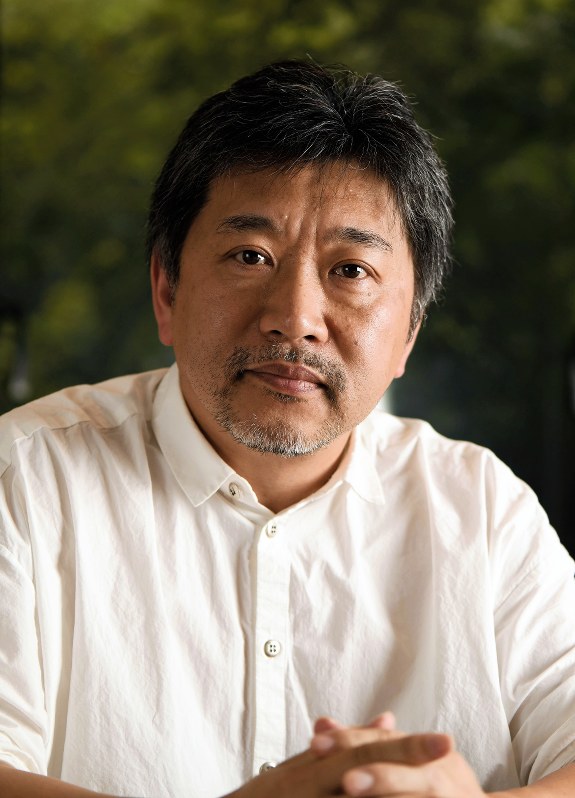
This post is, at its heart, my way of proselytizing for the Norwegian novelist Per Petterson and the Japanese film auteur Hirokazu Kore-eda. I must be one of a very small number of people to name these two men in a personal top-five, and while sometimes we prefer to keep these sorts of fan clubs exclusive, this is one of those cases where I just want everyone I know to discover them too. But there is more reason for me to pair them in a blog post than the mere fact that I love their work, as they have a number of compelling things in common, including this attribute of compassion. By putting them in conversation, I hope to make a case for why you should look them up, and why their style of art is something capable of moving us towards a compassionate experience which so much other entertainment lacks.

One doesn’t need look half-way around the world to engage with art that instills compassion and empathy, but it doesn’t hurt[2]. Art has the remarkable ability to help us see how we are like the characters, and therefore like other readers and viewers, and this effect multiplies when the others we encounter are separated from us geographically and culturally. Petterson and Kore-eda bring American audiences to a setting outside their own, as both create work with a distinct sense of the places they’re from. For Petterson, this is Norway, ranging from World War II to the 21st Century, from the idyllic countryside to working-class towns. One might have a general idea of what this is supposed to feel like, but Petterson’s perspective delivers enough difference to the reader to keep it fresh, such as the attitudes of Norway’s urban working class. All of Kore-eda’s films (until his upcoming release The Truth) take place in contemporary Japan, and so each film presents an encounter with newness and opportunities to see and learn about a different way of life well beyond the more well-known aspects of Japanese culture.

The difference confronting audiences is tempered by familiar through lines from work to work. Each artist would work well for a starter-pack meme: Petterson’s novels are filled with cold, snowy winters, cigarette smoking, painful memories, strained family relationships, father-son conflicts, childhood traumas, keeping warm under the duvet, eating waffles, references to socialism/communism, and a few of the novels use the same stand-in for Petterson named Arvid; Kore-eda’s films are marked by family drama, questions of parenthood, preparing and eating meals, people taking baths[3], at-risk children, prayers at family shrines, and recurring cast members like Kirin Kiki and Lily Franky. There is also consistency in style, tone, and aesthetics. However, the familiarity does not result in a paint by numbers feel, or even the sort of self-referentiality that other creatives with a distinct style can fall into[4]. Rather, I find that it helps bring me into the right mindset, to feel the rhythm, and to be paying attention to the subtleties. It also builds a relationship and a rapport with the author, or, in order to avoid an unnecessary discussion of Roland Barthes, at least a relationship with the type of work.

And what do I find when I follow Per Petterson to a cigarette in the snow with grieving Arvid, or as I watch another one of Kore-eda’s tense family dinners around a chabudai?

I find people. People I cannot turn away from, whose spirit is so familiar even in foreign circumstances, whose pain and whose hope becomes my own. Each artist has mastered the craft of bringing me into a world where my heart and mind are ready to encounter someone else and respond with compassion and empathy.

I find myself waking up with Trond, the point of view character in Out Stealing Horses, as the prospects of growing old alone wash over him while he lays in bed. I breathe the cold and refreshing winter air as he walks his dog, and I grow in understanding of him as the narrative shifts between his present day and memories of his formative summers in the countryside with his father. I find myself gripped by the emotional breakdowns which come for Tommy and Jim, the central figures in I Refuse, as a chance encounter after thirty years reminds them of their shared history and how their lives became devoid of love.

There isn’t much in the way of conventional plot in Petterson’s novels. Instead, he introduces characters with complex family issues and various traumas, and through events that are often unremarkable, he builds our understanding of their world and what they’re facing. Arvid faces his impending divorce and his mother’s cancer diagnosis in I Curse the River of Time, and he spends a couple days with her when she returns to her native Denmark. That’s about all that “happens” in the novel. But Petterson turns reflections over the sound of a coffeemaker into compelling moments of drama. And, throughout his work, Petterson writes in beautiful, simple prose, and while his particular choices make it best to read it in Norwegian, the style comes through even in translation. In I Curse the River of Time, he uses some of his most tender writing to describe Arvid’s memory of a retreat to a cabin with his future wife, only to shatter the fragility of that memory: “The water around the boat fell silent, and silently the cabin was floating up above the rocks and the smoke rose softly from the chimney, and how impossible it was to grasp that in the end something as fine as this moment could be ground into dust.” It’s a devastating, perfect turn.

The initial circumstances of a Kore-eda film are often simple to explain, even if the premises range from a simple family visit in Still Walking to the impossible situation facing two families who find out their sons were switched at birth in Like Father, Like Son. However, each film becomes an intricate study of human interaction which unfolds scene by scene, and the final act is always an emotionally-devastating pay-off of the themes established earlier and a series of call-backs to what might have seemed like minor details. Shoplifters introduces us to a family unit, but spends the rest of the film revealing the true composition of that family and, in doing so, poses the question of what actually counts as a family.

Just as Petterson gently ushers readers into the anguished psyche of his characters, Kore-eda deftly places the viewer inside the homes of his families. The set design, acting, and dialogue are all works of genius that dissolve the space between screen and audience. Every single time a character performs an action or uses a prop, it feels like the most natural thing in the world. You know how sometimes it seems like a character in a movie sits down or picks something up while giving a speech just to have something to do? Never happens in Kore-eda’s films. The characters become impossible to look away from in their humanity, and that humanity includes heartache and longing of a profound nature.

Both artists examine their characters with sincere compassion and empathy (and encourage the audience to do so too) even as their characters have serious shortcomings. Many of Petterson’s protagonists self-medicate with sex and alcohol while being predisposed to violence and general apathy. Petterson doesn’t judge them, and while he explores societal conditions, he doesn’t excuse them. Rather, he tries to help us understand them. The protagonists and sympathetic characters in Kore-eda’s films often have less than admirable qualities and make bad decisions, but the audience is invited to understand and empathize and question their assumptions, suspending judgement long enough to see them as complex humans in this impossibly complex life.

They’re not entirely the same, of course. Petterson’s spare style results in a dream-like haze, while Kore-eda’s minimalism focuses attention on the details of chopping vegetables and the regular hum of a conversation. Even when the premise or circumstance of Petterson’s work revolves around a great event like World War II or the Scandinavian Star ferry disaster, the story remains less-plotted than Kore-eda’s narrative. Petterson engages with social issues, though not as overtly as Kore-eda. But the differences the two men exhibit in their craft makes their similarities that much more compelling. A Norwegian novelist and a Japanese filmmaker have each developed a unique and brilliant style of storytelling, and in doing so they have demonstrated a keen eye and caring heart even while looking directly at the painful complications of being a person, and they have managed – time and again – to deliver these compassionate and empathetic looks at humanity to readers and viewers in compelling works of art. That compassion, that aching co-existence with broken people, is as much a part of their style as melodic prose and contemplative pacing, as natural a presence as heart-shaped waffles or fried tempura.

Thankfully, both Kore-eda and Petterson are continuing to produce new works. Kore-eda is 57 and releasing a new film at a rate of about one per year, with The Truth arriving in October. Petterson is 67 with a new novel about every three years, publishing Menn i min situasjon last October, which will be released in English as Men in My Situation sometime in the next year or two. Though not household names, they are experienced, established, internationally-recognized artists who still have something to say, and each has shown the ability to try new things while remaining true to what makes them great.

Now I hope that you will see for yourself.

Please read Out Stealing Horses. It’s a beautiful, contemplative look into the quiet life an old man and the riveting moments which have stayed with him, dramatic and subtle alike. It’s probably Petterson’s best, but the rest of his bibliography will not disappoint. It’s a short, accessible book that will move and provoke, a page-turner that demands a reread.

Please see Shoplifters. It is one of the most emotionally-affecting, thought-provoking films in my recent memory. Kore-eda is at the top of his game, and the performances are absolutely astonishing. You have to see this film. If it’s the only one of his film’s you see, it will be worth it, but don’t be surprised if you begin to explore the rest of his phenomenal filmography.

I don’t want to judge what you read and watch or how you spend your leisure time (that’s not to say I don’t do it). But I sincerely hope that you will consider whether or not you are really seeing the people you’re looking at. What do the images of humanity you see every day demand from you? And how will you respond?

Your public library is freeeeeeeeeeeeeeeee.

Forth now, and fear no darkness.

Soli Deo Gloria

-Peter

Notes

~click the number to return to the text~

1 It’s a little fraught to quote Kundera in a post about compassion and the value of empathy when The Unbearable Lightness of Being grapples in such complicated ways with Nietzsche’s philosophy. Oh hey Fred btw God is still alive.
2 I don’t watch enough foreign films to be that guy, but in my opinion two of the three best films from last year were foreign (Roma and Kore-eda’s Shoplifters), and Burning and Cold War were also really, really excellent. I would like to see the Academy and American audiences give great foreign films more recognition, and it’s looking like many of the best films of 2019 will end up being foreign projects. Hopefully they’ll get their due.
3 Bath culture is one of the things I’ve learned about Japan by watching Kore-eda. I was like why are they all so intent on taking a bath at night and then it kept happening and I was like oh this must be a thing and turns out it is. Something like this wouldn’t occur to me otherwise, and these small exposures to cultural difference have value when interacting with art from other countries.
4 One of my other most favorite filmmakers is Wes Anderson, and while I think some people are overly critical of his signature style, I do acknowledge that, to some extent, each successive film parodies what has come before.

I Wrote a Fairy-Story

Some thoughts on the process of writing in one of the genriest of genres.

I’ve wanted to write a work of fantasy since I started writing[1]. And in fact I began my career (in 2nd Grade) with a story called Sorfanzorck where different types of monsters do battle in a world called Sorfanzorck. I tried a few times as I got older to write a bigger and better one (including Sorfanzorck 2), but I always gave up. As I got older and started writing more fiction, I thought up plenty of ideas for novels (fantasy and otherwise), but I didn’t write a complete draft of one until I was *checks notes* 22 years old[2]. It was a family drama, which is a far cry from high fantasy. The next novel I wrote was a fairly subdued literary fiction type deal, and while the supernatural crept into the novella I wrote after that, it was still about a young boy in 1960’s rural Wisconsin.

But, in the meantime, I was delving more and more into fantasy storytelling, as much of my last year or so has been devoted to the Tolkien legendarium and A Song of Ice and Fire + Game of Thrones. In so doing, I found myself thinking up my own fantasy stories, or bits and pieces of them, but I was hesitant to try to put them together into a full story. It felt pointless to do so when there are so many towering achievements in the genre, as well as myriad lesser imitations that have still managed to get published. It was the wrong way to think, but I was feeling like my fantasy world needed to do or say something in a distinct voice.

The push I needed to start writing turned out to be the final season of Thrones, not because it was good, but because it wasn’t[3]. In my frustration with the ways the storytelling faltered, especially in comparison to all of the thoughtful fan theories that had been going around for years, I thought it was time to go for it, even though at that point all I really had were a few general characters, scenes, and concepts to work with. Many people, including the incomparable Dr. Ed Risden, say to write what you want to read, rather than just wishing that story had been written by someone else. Writing a fantasy of my own was a way to engage with my love of and disappointment in Game of Thrones.

My endeavor[4] reinforced the fact that writing fantasy is really challenging, but it also made it clear to me that it is doable and that so many of the mistakes made by certain Emmy-nominated writers are inexcusable. Here are some things I learned in the experience of writing a fantasy novel:

It’s harder than writing other fiction. This is another reason why I was hesitant to start writing; writing a novel is hard enough without having to account for all the world building that goes into writing fantasy. What does this world look like? Who lives there? What technology exists? Are there non-human creatures? Is there magic, and, if so, how does it work? These questions (and many more) have to be answered in order to make the world feel real, and the rules of the world have to be consistent. A strong sense of place is necessary in all fiction, but it’s easier to guide the reader through 2000’s rural Wisconsin than it is to bring them into an imagined world, even if the reader is familiar with some standard fantasy conventions and tropes.

It’s also easier than writing other fiction. Turns out, being able to make things up is easier than following the rules. As I just said, writing fantasy requires the author to establish and follow in-universe rules, but that can be easier than abiding by the rules of this universe. Writing a period piece requires looking up things like what year Ben E. King released “Stand By Me” and what kind of trucks people drove in the 50’s and 60’s. Writing contemporary literary fiction requires a realistic imitation of the world that all your readers are familiar with. But in a fantasy world, I get to decide how the government works, how far it is between here and there, what kind of weapons people use, and how the class system makes people feel. I have to be consistent with those made up things, and consider how the imagined rules impact the characters, but there are times when that can be easier than trying to imitate what the real world is like.

Names, maps, and languages are not just bells and whistles. This is both a routine annoyance and a fundamental part of building a world. What to name your characters and your places, and why? Names and the sounds of names mean something. The language people use changes how they relate to each other and understand their world. It isn’t necessary to invent a language before writing a fantasy novel, but at the same time Tolkien’s approach to world-building is not just an extra move by a gifted philologist. A working system of words help breathe a world into existence. Rather than try to make up names, I used a name generator (which is itself an impressive work – follow that link and check out Emily’s project). Even doing that was not mindless or random. In the future, I’m sure I will change many of the names to increase the consistency, and while doing it this way worked fine, it revealed how a world can be enriched by a good system of language and naming.

So too with places – the actual shape and topography of the world. I haven’t created a map yet, but I will have to at some point. It gets tricky, because things need to happen in specific places, and those places need to be the right distance from each other, and what is next to what will affect what happens where. Again, Tolkien established his maps early, and while “Of Beleriand and Its Realms” is rightly considered the driest chapter of The Silmarillion, it’s still part of an important task in building the world[5].

Building the world helps tell the story. In describing the interior of a palace-type building, I referred to how the art and architecture represented the historical time period when those parts of the palace were constructed, giving my world history. One of my characters is a high-ranking official, and in her first chapter she brushes off the supplications of a low-level official, and then I thought hey, I want to know what’s up with that guy, so I made him another point of view character. A valuable metal is crucial to life in my world, but in order to make it more than a McGuffin, I considered how its value would impact society, and what would happen if one of the characters discovered it in their lands. World building is hard and takes times, but through it the story reveals itself.

Chekhov’s lore is useful and a ton of fun. Sometimes worldbuilding involves referring in passing to a person place or thing, and the first time its mentioned I might not really know much about that person place or thing. But then, later on, an opportunity will arise to mention that person place or thing again, and this time it feels much more real and much less like a place-holder. It’s important in storytelling to set things up ahead of time, and sometimes this can be done by just referring back to something mentioned earlier. This is also a way that symbols and themes can emerge in telling a story. I didn’t know that fire would be an important symbol in my story, but it just sort of arose naturally as a recurring thing.

It’s surprisingly easy to insert social commentary, but a little subtlety is important. One of the (many) reasons it is ridiculous to deride fantasy as escapist is because so often it reflects or comments on our own lived reality. We can see this in the psychology of characters, but also in their sociological conditions. I found, in constructing a society, that it was a natural thing to invoke our own social issues, both intentionally and without thinking about it. Either way, I found that the more overt it was, it was more likely to jar a reader out of the world and not match with the tone of the story. I also found that it was useful to have multiple characters give a perspective on an issue.

It’s important to consider how to go about making intentional references to social issues, but I also found how easy it is invoke various issues unintentionally. Race and gender are tricky in fantasy, and I’m not going to try to give this a full discussion in one small post right now, but suffice to say that as a white American male it is too easy to fall into the familiar mistakes.

Characters still matter (duh). A fantasy story has the inherent advantages of constructing a captivating world full of intriguing creatures and powers, but I found myself still most drawn to making great characters and having them interact with one another. I wrote my most favorite character ever in this story, and, for the first time, I got a little bit emotional when I killed a character off. It’s easy when writing genre fiction to rely on tropes and archetypes – I don’t have to do as much work to acquaint you with the wise old man as with some rando guy in rural Wisconsin – and it’s okay to use tropes and archetypes to some extent, but it’s even better to write in relation to those existing conventions. It’s become exhausting to mention “subverting expectations” in relation to Thrones, but what made Jaime arguably the best character in the books and in the show (until they made a mess of it) was the way his character subverted the idea of the knight in shining armor.

World building is crucial to fantasy storytelling, but the story becomes something special when compelling characters act within that world and interact with each other.

There’s no internet. It’s fun to write about a world where people hear things via word of mouth. I love the the way this works in ASoIaF + Thrones, and actually the video game Skyrim uses it to nice effect, too. People hear about things going on in the world days after they happen, and probably with some healthy embellishment, and they talk about them with each other (“did you hear,” “they say,” “then I took an arrow in the knee”). It’s a lot more interesting to have your characters talk about something you wrote a few chapters earlier than it is to describe a scene of a bunch of people staring at their phones (if you’re reading this on your phone please finish reading, share a link to my blog, and then put your phone away).

Earned epic moments are fun to write, not just to read. I don’t mind reading and writing little scenes. I enjoy writing dialogue. Many of my favorite things to read are not necessarily plot-driven, and my own longer works often lack drama. But oh man is it fun to write an epic banger of a chapter. We love these moments in fantasy stories that give us chills[6]. I can now confirm they are fun to write, not just read. However, I was reminded of how important it is for these moments to be earned. In this most recent work, one of the first ideas I had was for this dramatic moment in a battle, but it didn’t end up happening until one of the last chapters. So much of the the story went into setting it up, and I had to be patient even though I wanted so much to write it. The moment did not disappoint, and I love what I came up with, and I love the way the rest of the story built towards it.

And, lastly, I feel more sympathy for George. I have taken a fairly moderate stance towards George R.R. Martin’s lack of progress in finishing The Winds of Winter, let alone A Dream of Spring. I understood why it was taking him so long, and recognized he was carrying quite a burden, but I also couldn’t quite wrap my head around why he wouldn’t just freaking go for it and finish the damn thing. My guess is I would be even more frustrated if I wasn’t such a new reader (there are people who have been waiting 23 years for this saga to end). However, now, after trying in earnest to write some fantasy, I understand just a little better the challenge he is facing. I’m already starting to see how much I have to keep track of while trying to construct a coherent narrative, and my world is 1/100 the size of Martin’s. He has the expectations of millions of readers, so he has to get it right, and, well, knowing what “right” is can be quite challenging. You can do it, George!

That’s all for now. Maybe someday you’ll step into the world I’m working on, but for now I’m glad you took the time to read this. Look for another (quite different) post next week.

Forth now, and fear no darkness.

Soli Deo Gloria

-Peter

Notes

~click the number to return to the text~

1 Oh goodness me that is a terrible way to start a blog post. But it’s true.
2 And it was baaaaaaaad. But that’s okay! There was some good in there, and writing is like anything else that requires failures to improve.
3 For the most part, I tried to not think about the last two seasons or engage with Thrones-related content for a few months after the finale. It’s only recently I’ve started thinking back on how bad they were. I really, really enjoyed Lindsay Ellis’ two-part breakdown of the problematic writing.
4 I always type this word “endeavour” without thinking and I want to leave it that way but the squiggly red line is just too much for my OCD brain. That’s an Anglicization we need back.
5 Just wanted to take this opportunity to say I love The Silmarillion and also it is better than The Hobbit and we need to stop scaring people away from it by saying it is challenging and/or boring.
6 Speaking of The Silmarillion, sometimes I just think about Fingolfin calling out the most powerful being in Middle-Earth to fight him and I’m just like man. That’s got to be the most epic moment besides Húrin’s last stand.