Siegfried

That is not it,
she said,
that is not what I meant at all.

Might I step back then?
he said,
Behind the line that I just crossed?
The invisible barrier we both knew was there
but chose to see through -
it couldn't hold me forever
and I finally dared to step forward
to lay at your feet on the threshing floor.
May we return, you and I,
to the days when I would glean from
flaxen fields of grain
until the end of day
beneath vermilion dusk?

No, the gate has closed behind you,
she said,
and all has changed going forward,
behind you is a blurry mess,
and here is searing clarity.
This is where I'm supposed to be,
you run along.

No!
he said,
I didn't know I'd make it so far,
I don't know how to go on!
Arrival was the battle,
how unjust that I should take the field
just to make my grave here.
I cannot bear the shame,
my armor cannot hide me
and my sword is dulled.

Poor man,
I say,
who won't meet tomorrow
like he received today.
How wasteful,
how profane.
Slaying a wyrm to become a worm
all the same.
My Man Mesut

I shall endeavor to explain why I have a man-crush on Mesut Özil.
But first, so as to avoid confusion and belay bewilderment, let me give a brief and not nearly sufficient definition of man-crush.
Let’s get this on the table: there is a homoerotic element to a man-crush. This is just a fact of human existence. As my religious studies professor says: “Everyone’s a little gay.” However, homosexuality is a separate thing from a man-crush; I would argue they are mutually exclusive. There is an admiration for physical qualities, but it is hardly contained in that. In fact admiration is probably the word for it. That admiration comes from a desire to display the same attributes of that person (which is why so many men have a man-crush on Aragorn). I don’t know, Freud would have a very different explanation, but suffice to say it’s an admiration of someone that feels stronger than, “Oh, hey, that guy’s pretty cool” and there is, too an extent, a physical attraction involved.
I have a man-crush on Mesut Özil, the German attacking midfielder who currently plays for Arsenal, who just a few hours ago helped his team through to the finals of the FA Cup, providing a beautiful assist to Alexis Sanchez.
Why?
Well first of all I find him intriguing. Non-Germanic German-citizens are interesting to me, and there’s something fascinating about people who don’t look like your typical Hans or Siegfried speaking perfectly normal German *cough* like the German-born player Jurgen included on the national team instead of Landon Donavan *cough*. Being the son of Turkish immigrants (of which there are many in Germany) makes him a great combination because he’s Middle Eastern (always intriguing) but also German, and just being a footballer for Germany makes you a likely candidate for man-crushes.
His play on the pitch is beautiful. Calm and assured in possession, his finesse makes him seem untouchable at times. He glides above the ball, seeking out teammates, making top shelf passes look routine. Crafty touches here and there free up teammates, making chances out of seemingly nothing. He handles dead-ball opportunities, sending in deadly free-kicks and corners with his golden left foot. He changes the game offensively, and does so with deftness. So much so that I don’t even mind that he doesn’t care about playing defense. I just like watching him play soccer.
And yes, there is some element of physical attraction. But I can’t explain what it is. Again, this is why a man-crush is separate from homosexuality. I would imagine a gay man could tell you he likes another man’s muscular body,  his handsome rugged face, his flowing hair, etc. much like I know how I could usually describe the beautiful features of a woman (although describing faces is so bogus. There is no formula for what makes an attractive face, let alone a good way to describe it). So yeah, I can’t say for sure what I find handsome about Özil, and it’s important to note that physical features are not the basis for a man-crush. I will say though that there is a common theme in three of my man-crushes (Özil, rapper JGivens, and my friend Ross), and that is big eyes. That might just be a coincidence. However, in Özil’s case, the big eyes also contribute to the fact that he looks a lot like Uma Thurman, and since I’m a fan of Uma, that could play into all of this (seriously, Özil looks a lot like a younger Uma).
I’d like whatever I write on this blog to have some sort of meaning beyond spouting personal confessions, and while I hope this article will make you a fan of Mesut Özil as a footballer if not for his handsome appearance, I’d hate to leave you feeling like so what?
So here’s something: why are man-crushes so common in heterosexual men? Follow up question: to what extent does our society still exhibit and/or endorse Platonic/Socratic love among men?
Because I feel like there is a lot at work that cause this kind of homosexual admiration. The first being, like my professor says, “Everyone’s a little gay.” Because I think we all know that this is, to varying extents, true. How does that affect our perception of being defined as homosexual, heterosexual, or bi-sexual? What does it mean to be born one way or the other? Where do we draw lines? I’m not making an argument in any direction; I’m just saying that, in a day and age when homosexuality is such an important issue, it might be worth-while to consider how heterosexual men can admire physical attributes of other men.
But as for Platonic/Socratic love in men: is this still around? Do we still have this profound love that does not move us to sexual action? I think it’s very rare, almost non-existent, at least not like in the old days (not the old old days when Greek and Roman men would caress each other and such, but like the sorta old days when Christianity said no-go to the homo and took the physicality out of it). Brotherhood still certainly exists, particularly in sports and (as always) in the military, but does this love of fellow man still happen? Perhaps it does, and I suppose we would have to get tricky with definitions to categorize friendship, comradeship, brotherhood, erotic love, and Socratic/Platonic love, but I think it is largely gone and I have a quick theory. Bear with me here, then I’ll let you go:
I think the exaltation of the individual in modern society – one of the most important developments in western history – has played a role in diminishing this in contemporary masculinity. Don’t get me wrong, I’m all about the 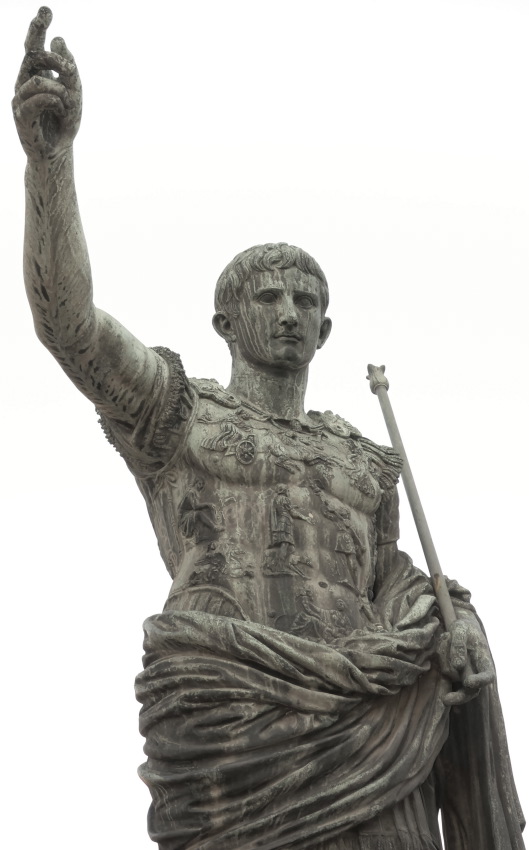 individual, but it comes at a price. Consider this: is there anyone out there who could inspire you to cast aside self-regard and go above and beyond what you thought possible beyond family members or significant others? Probably not. But back in the day, a single man could inspire others to greatness just by his mere presence, and I think it’s because the man exhibited some sort of ideal. In ancient Rome, Julius Caesar was the ultimate example of strength and Roman glory, and as a result, according to Plutarch, “such was the affection which Caesar inspired in his soldiers, and such was their devotion to him, that they who under other leaders were nothing above the common, became under him invincible and capable of meeting the utmost danger with a courage which nothing could resist.” Plutarch gives an amazing example of this devotion:
“For instance, in Britain the Romans met the natives in a marshy spot, and a band of Caesar’s men found themselves entrapped among the Britons. One of the Romans took the lead, hewed right and left among the islanders, beat them off, and rescued his comrades. Then he plunged into the stream that ran by, swam it, waded through the mud of the swamp, and reached the place where the general was watching. However, he lost his shield, and, in deep distress, he fell at Caesar’s feet, saying: ‘General, I have lost my shield. I ask your pardon!'”
Today, people can define for themselves what is important and what they want to be. That’s a new, western development in human history. As a result, we don’t care about stuff as intensely as we used to, and because we are not driven by collective ideals in this way, we don’t have so many exemplars to venerate. Of course I am speaking generally, as there are still ideals that many people hold onto, and there are also exemplars out there. Take, for example, blue collar conservatives and Chris Kyle.
So I think Socratic/Platonic love is connected to this concept: when a man exemplifies an intensely important ideal, other men, wishing to display that ideal as well, love and admire the man profoundly.
So maybe that’s it: I see in Mesut Özil a reflection of what I want to be.
Or maybe I just see Uma Thurman.
Soli Deo Gloria
– Peter
Dormant, Couchant, Sejant, Rampant
Way too much essay writing recently, which has been my daily regimen the last couple days. Here’s a poem.
Dormant, Couchant, Sejant, Rampant

What moves a lion?
Or, rather, what makes a lion move?
Lazily lounged on some proud rock
or nestled in soft long grass
on a bright hot day
soothed in gentle breeze.
Safe, so safe, such a mighty beast
not bound by other beings on the chain.
What could trouble a lion to stir from sleep
rising from a soft spot of ground
to leave his dozing wives and children?

Deep in the countryside in a kingdom of his own,
resting in the stillness of the day and the songs of birds
beneath the shady limbs of a baobab,
with meals earned by the labors of others
and the luxury to pardon passing beasts,
why, why, would the lion ever move
unless bid, unless made, to do so?
And yet they do.

Unless an illiterate beast put forth such a lie
to fool nations, gods and kings, knights and athletes
into striding forth with a flowing mane and regal posture
claiming nobility for a scared kitty with unwieldy hair.
I doubt this is the case. Sometime the lion had better
stand up and
roar.

And roar they do,
shattering the African night
knocking jackals back
instilling fright in cackling hyenas
smashing leopards' courage to pieces
and making great beasts a rotten feast for vultures.
A snarling smile of sabers and swinging fists of scimitars
giving way to thunderous voice and clapping paws.
Bunched sinews and hulking mass a
swishing tail wishing for a fight.
A battle royal with royalty is a route to the boneyard.
One could see a single lion
with his pride backed into a corner
raging against a score of foes
scourging all who tread past bark for bite.

So when he could lounge, tired on a sun-loved day,
what beckons a beast who could lunge through fire
to rise and fill the frame of a monarch
with such a kingly disposition?

Perhaps,
for those with an oft-whispered roar
reposing in languid indolence
under jet black quilts of vespers-
perhaps
for them it is to waylay the suicide of the soul
and trade lazy dreams and the nightmare of daily regicide
and the burden of bearing two weighty prides
and the heavy head of crown-wearing
for the chance to, at the stirring of the soul
but toss back their head and howl
an air-rending call to heaven:

"I am Resolved!
to live!
to live with all my might!
while I do live!"

This resolution - this sixth - it is sweeter.
Perhaps man could learn something from a man-eater.
The Feels – April 15
This will be especially potent if you like Lord of the Rings and are a man.
1. Play this video on YouTube in the background by clicking this link: Khazud-dum loop.
2. Listen to that as you you read this poem, “Do not go gentle into that good night” by Dylan Thomas.
Do not go gentle into that good night,
Old age should burn and rave at close of day;
Rage, rage against the dying of the light.
Though wise men at their end know dark is right,
Because their words had forked no lightning they
Do not go gentle into that good night.
Good men, the last wave by, crying how bright
Their frail deeds might have danced in a green bay,
Rage, rage against the dying of the light.
Wild men who caught and sang the sun in flight,
And learn, too late, they grieved it on its way,
Do not go gentle into that good night.
Grave men, near death, who see with blinding sight
Blind eyes could blaze like meteors and be gay,
Rage, rage against the dying of the light.
And you, my father, there on the sad height,
Curse, bless, me now with your fierce tears, I pray.
Do not go gentle into that good night.
Rage, rage against the dying of the light.
 eloquent mumbler